SILVER
Sajek Integrated Learning & Eco-Restoration
A live laboratory in the Chittagong Hill Tracts — where every structure, utility and ecosystem is designed as a research output.
📍 Konglak, Sajek · Baghaichhari Upazila, Rangamati Hill District
Executive summary
The Sajek Integrated Learning and Eco-Restoration (SILVER) project is a pioneering initiative to establish a comprehensive, net-zero, and culturally sensitive centre for research, training, and demonstration in the Chittagong Hill Tracts (CHT) of Bangladesh. Located in Sajek, Rangamati District, the project addresses the critical challenges of unsustainable tourism, climate change vulnerability, and the erosion of local heritage. SILVER will function as a Live Laboratory by integrating core infrastructures and activities — from eco-friendly accommodation and a DC microgrid to a hybrid forest and a heritage archive — to demonstrate scalable, environment-friendly solutions for hill-tract development.
12–20
Eco-friendly cottages
50+
Heritage elements archived
100+
Community members trained
80%
Ops self-sustainability (5 yrs)
Why SILVER
Unsustainable tourism. Climate risk. Heritage under pressure.
Sajek Valley has rapidly emerged as a major tourist destination in Bangladesh. While this has brought economic activity, it has also led to unplanned and environmentally damaging infrastructure development, placing immense pressure on the fragile hill ecosystem, water resources, and local culture. The region is highly vulnerable to climate impacts including increased rainfall intensity, landslides, and water scarcity.
Environmental degradation
Unregulated construction, poor waste management, and excessive water extraction are destroying the natural ecosystem and increasing the risk of landslides.
Climate vulnerability
The region lacks climate-resilient infrastructure and adaptation strategies, making communities and ecosystems highly susceptible to climate shocks.
Loss of heritage and traditional knowledge
Rapid, unmanaged development threatens the unique cultural heritage and traditional ecological practices of the local communities.
Lack of demonstration and training
There is no dedicated, integrated facility to research, test, and demonstrate viable, environment-friendly alternatives for infrastructure, energy, and resource management in the CHT.
Component goal
To establish a self-sustaining, net-zero, and culturally sensitive Live Laboratory in Sajek, Rangamati, that serves as the premier centre for research, training, and demonstration of integrated solutions for environmental conservation, climate resilience, and sustainable development in the Chittagong Hill Tracts.
The site
Four components, one living system.
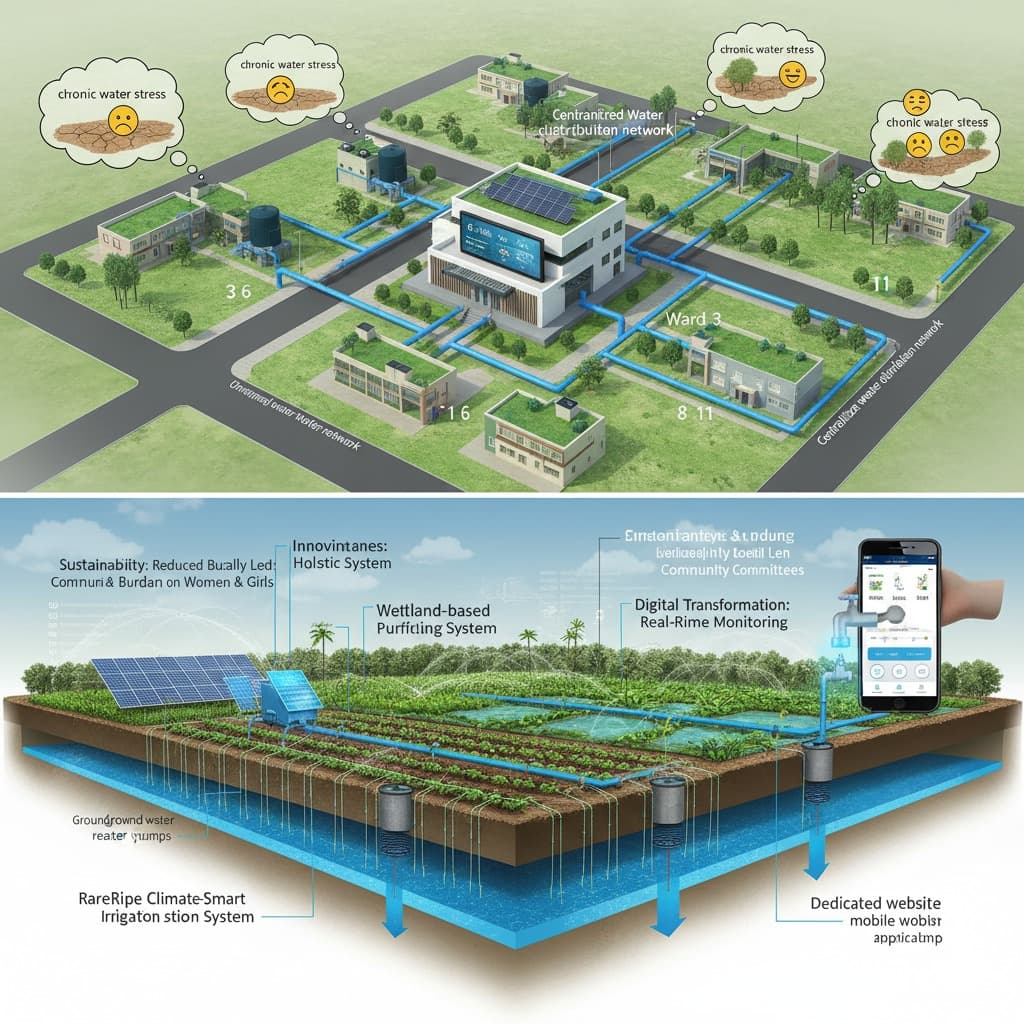
Net-Zero Infrastructure and Resource Management
Physical infrastructure and closed-loop resource systems that define the project's net-zero commitment.
- A1Sajek Eco-Stay & Lab / Resilient Hillside Housing Research Unit
- A2Energy Independence Test Bed / DC Microgrid & Solar Power Lab
- A3Decentralized Water Cycle Management / Closed-Loop Water Cycle
- A4Zero-Waste Circular Economy Demonstration Unit
- A5Modular Sustainable Habitat / "Net Zero Living" Demonstration House
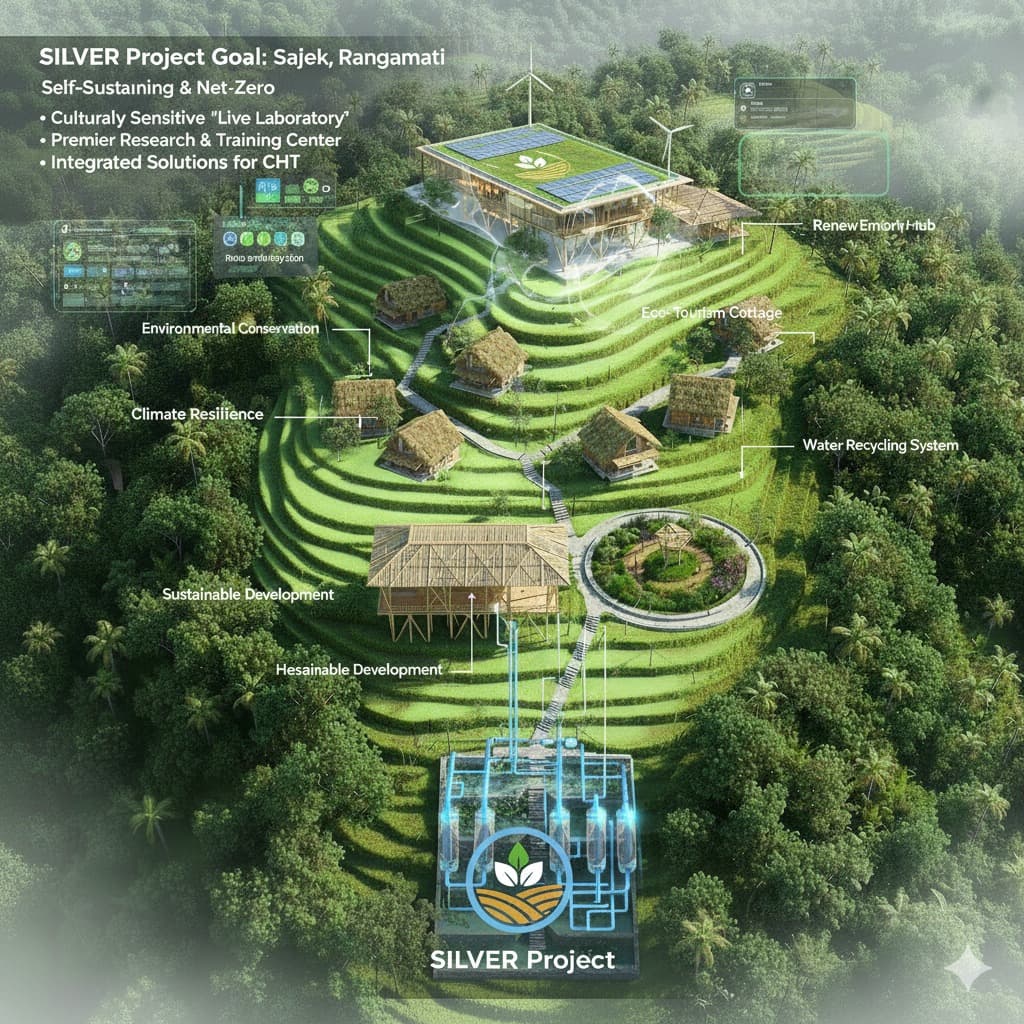
Research, Learning, and Heritage
The intellectual core of the project — knowledge generation, preservation, and dissemination for the Chittagong Hill Tracts.
- B1Applied Hillside Climate Solutions Institute / Live Laboratory
- B2CHT Ethno-Ecological Archive & TEK Center
- B3Ridge-View Reading Room / Sajek Knowledge Hub
- B4Sajek Summit Conference Space / Green Canopy Training Arena
- B5Digital Heritage Documentation and Virtual Archive
- B6Citizen Science Program for Biodiversity Monitoring
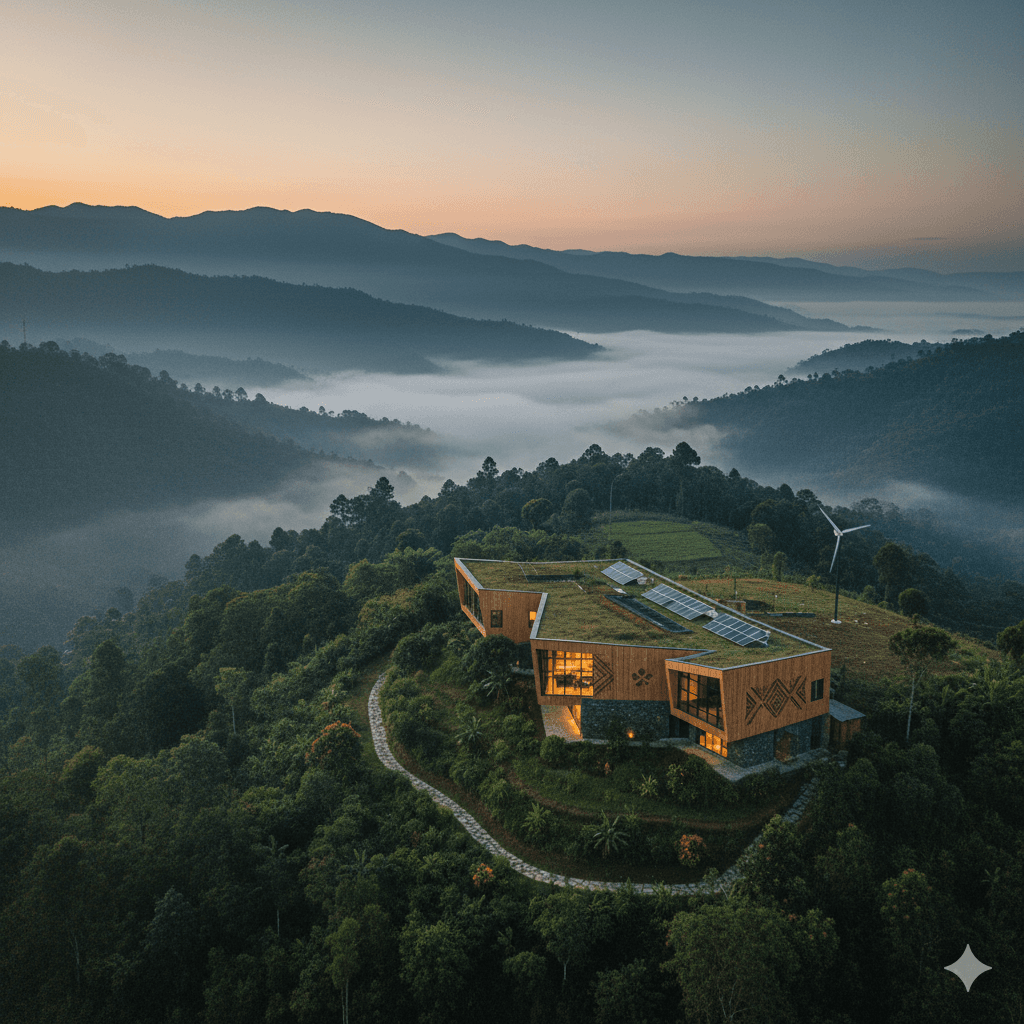
Ecosystem Restoration and Climate Resilience
Active restoration of the local environment and development of climate-adaptive strategies.
- C1Carbon Credit Forest / Accelerated Ecosystem Restoration Forest
- C2Good Practice Farm & Garden / Sustainable Agroforestry Practice Lab
- C3Aranya Bhoj / Forest Feast / Farm-to-Table Experience
- C4Climate-Resilient Seed Bank and Traditional Crop Preservation
- C5Hill Slope Stabilization and Erosion Control Demonstration
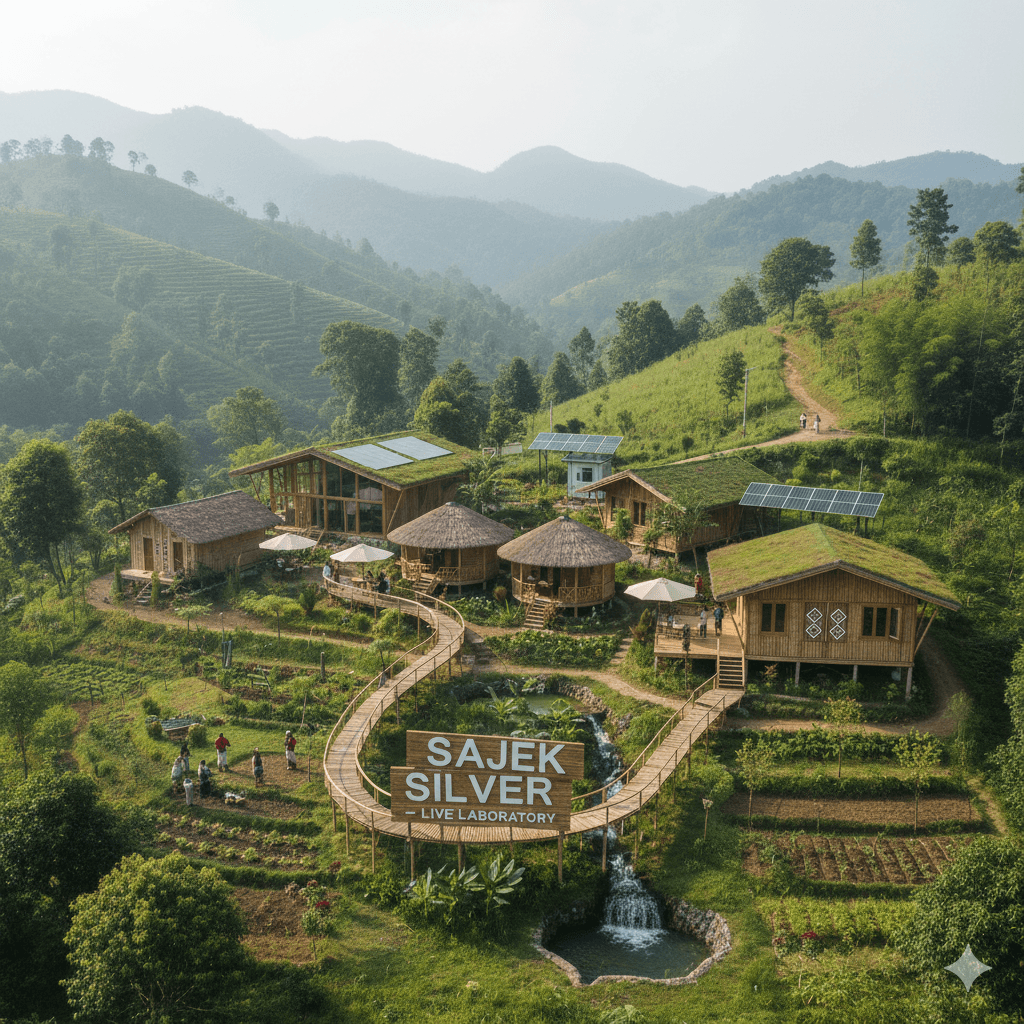
Sustainable Tourism and Livelihood
Integrating project infrastructure into a sustainable tourism model that promotes fitness and local livelihoods.
- D1Hill-Tracts Fitness & Play Park / Sajek Zenith Activity Park
- D2Sajek Adventure & Fitness Academy / Trailblazer Academy
- D3Controlled Eco-Trail / Peak Pathways Eco-Trail
- D4Community-Based Eco-Guide and Homestay Training Program
- D5Eco-Art and Craft Workshop for Waste Upcycling
The intellectual core
Applied Resilience & Knowledge Hub
Where the Live Laboratory model turns infrastructure into research, and Traditional Ecological Knowledge into living heritage.
The Live Laboratory Model
SILVER is conceived as a direct, proactive response to Sajek's development pressures. By establishing a fully integrated demonstrative centre, it provides a sustainable tourism experience and a hub for applied research, capacity building, and knowledge dissemination on hill-tract development, climate resilience, and net-zero infrastructure.
Heritage as a living archive
The CHT Ethno-Ecological Archive & TEK Center documents and showcases the heritage, history, culture, and traditional ecological practices of CHT communities, with digital documentation for global accessibility and preservation.
Hybrid restoration & carbon forest
A hybrid forestation method (Miyawaki, Successional Agroforestry, ANR) optimized for local species, rapid carbon sequestration, and biodiversity restoration considering CHT geography, ecosystem, and water availability.
Circular economy in action
Zero-waste protocols, farm-to-table hospitality, and eco-art workshops that turn waste materials into marketable products — creating livelihoods while closing resource loops.
Objectives & KPIs
Measurable from day one.
Demonstrate sustainable infrastructure
Construct and operate 12–20 eco-friendly cottages and supporting facilities that achieve net-zero energy consumption and zero-waste discharge within 3 years.
KPI · Net-zero energy and zero-waste discharge achieved for cottages and supporting facilities.
Advance applied research
Establish a Research Center and Live Laboratory to conduct and disseminate research on 10 key areas, including climate change adaptation, hybrid forestation, and sustainable water management, within 1 year of operation.
KPI · Research centre operational; work underway across 10+ applied research areas.
Preserve and promote heritage
Create a dedicated Heritage Zone and Digital Archive to document and showcase the cultural heritage and traditional ecological knowledge of the CHT communities within 2 years.
KPI · 50+ heritage elements documented and digitised.
Build local capacity
Train a minimum of 100 local community members in eco-tourism, sustainable agriculture, and renewable energy system maintenance within the project's first 5 years.
KPI · 100+ community members trained; visitor learning and satisfaction tracked.
Achieve financial sustainability
Develop a self-sustaining financial model where revenue from eco-tourism and training activities covers 80% of the operational costs within 5 years.
KPI · 80% operational self-sustainability within 5 years.
Funding alignment
Built for the partners who back mountain resilience.
Adaptation Fund (AF)
Committed US$10M to the Green, Resilient & Adaptive CHT Economy (GRACE) project — direct alignment with SILVER's climate adaptation and Nature-based Solutions.
ICIMOD
Science-based, locally-led solutions for mountain communities — a natural strategic partner for the Applied Hillside Climate Solutions Institute.
UNESCO
Cultural and digital heritage focus — aligning with the CHT Ethno-Ecological Archive and digital documentation.
USAID / Global Affairs Canada
Biodiversity, ecosystem restoration and alternative livelihoods for Indigenous communities in the CHT.
GIZ
Environment, natural-resource management and capacity building — potential support for the training arena and eco-innovation.
Academic & research foundations
Collaborative anthropological and ethno-ecological research agreements with the Institute and Archive.
SILVER is one of nine living blueprints from HEAL.
Discover the full portfolio — from net-zero housing and water security to climate-smart farming and eco-entrepreneurship.
← Explore all HEAL blueprints